Queue management
Turn the 9 a.m. crowd into a seated queue
Wherever people currently defend a spot at a counter — a bank branch, a hospital OPD, a service office, a pharmacy at rush hour — a token system moves the queue from the floor to a number, and hands the manager the figure no register ever recorded: how long people really wait. Below is one clinic morning, told twice.
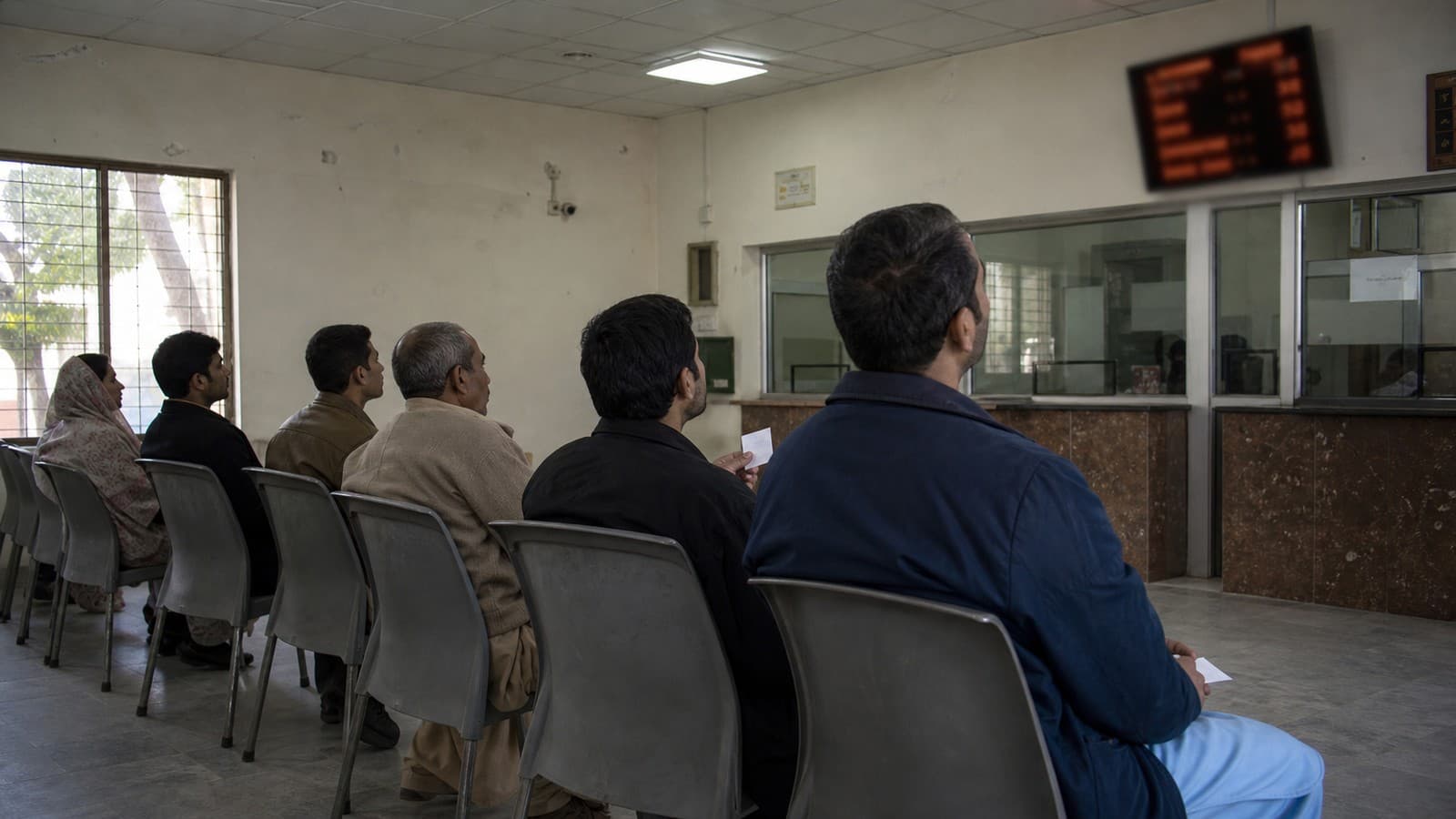
Everybody sitting down
A token machine at the door, a board that calls the number, and a report that shows the real wait — the crowd disappears on day one.
- Urdu and English announcements
- Per-counter reporting
- Sized to your footfall
| Time | Without tokens | With tokens |
|---|---|---|
| 8:45 | The OPD window opens onto a wall of shoulders. Three people are certain they were first, and the receptionist has already stopped answering the phone. | The kiosk has been printing slips since 8:30. The waiting area is seated, the phone gets answered, and first is a number, not a debate. |
| 9:30 | A name is shouted twice into the noise and nobody responds. The patient was outside taking a call; their turn quietly evaporates and the argument arrives twenty minutes later. | The board shows 12 → counter 3 and the speaker says it in Urdu. A missed call is recalled with one key, and no turn silently disappears. |
| 10:15 | An elderly man has been standing forty minutes because leaving the huddle means losing his place. Someone gives way; four people behind object; the clerk referees. | A priority slip moves him up automatically. The rule belongs to the machine, so the staff take no blame and the room takes no offence. |
| 1:00 | The manager asks how bad the morning was. The honest answer is a shrug — nobody counted, so nothing can change by next week. | The report reads: 61 served, average wait 14 minutes, peak 9:40 to 10:20. Next week the second counter opens for the peak ninety minutes, not the whole day. |
The four parts of the system
The kiosk
A button unit or touch screen by the entrance that prints the numbered slip. It can issue one queue or several — a branch can hand out separate tokens for cash, accounts and cards, and the software steers each to the counters that handle it.
The displays
One central now-serving board plus a small unit per counter. A glass-fronted Blue Area branch needs an LED board that beats direct sun; a corridor OPD does not. That difference is exactly why we look at the room before we quote the screen.
The calling unit
A keypad or on-screen button at each counter. Staff press next and the board and announcement do everything else — recall, transfer to another counter and no-show are one key each, learnable in minutes.
The reports
Served counts, average and peak waits, per counter and per hour. Owners buy the system for the calm and end up prizing this part most, because staffing stops being a hunch and becomes arithmetic.
Where it earns its price fastest
Bank and microfinance branches, where an orderly hall is a compliance requirement before it is a courtesy. Hospital OPDs, labs and busy clinics from G-8 to Satellite Town, where staff stop shouting names down corridors. Government-style service counters, where the token retires the argument the clerk used to referee. And peak-hour pharmacies around Saddar and Commercial Market, where the prescription queue and the till queue finally stop being one crowd. If your counter rarely has more than two people waiting, you do not need any of this — and the survey will say so for free.
Queue system questions
What does a token system cost in Islamabad?
A single-counter installation — ticket kiosk, one display board, calling software, fitted and configured — starts around PKR 160,000. A bank branch or OPD with several counters, a central board and reporting costs well beyond that and is quoted per site, after we have counted counters and watched the floor at its busy hour.
Does it announce tokens in Urdu?
Yes — Urdu, English or both, with the number always visible on the board as well. In an OPD the voice matters more than the screen: patients listen while attendants watch. Announcement wording and volume are set during handover, at your counter, not left on factory defaults.
What happens during an outage?
The queue survives it. The system sits on the same UPS that should already be carrying your counters — we size it as part of the job — and if power does drop, numbers pick up where they stopped. A queue that resets to one at the worst moment of the day would be worse than no system at all.
Will older patients manage the machine?
The kiosk has one button in its simplest form. For the first few days your attendant presses it and hands over the slip; after that, people copy what they saw the person ahead of them do. We stay for the first morning so the settling-in happens with us in the room.