Security & access
Four layers, fitted outside-in
A camera can only tell you what already happened. Prevention is the four layers below: a boundary that closes itself, a door that knows each person by name, a panel that notices what slipped past both, and a screen that shows you who knocked before anything opens. They work alone or together, and a free survey tells you which ones your building actually needs — not all four, usually.
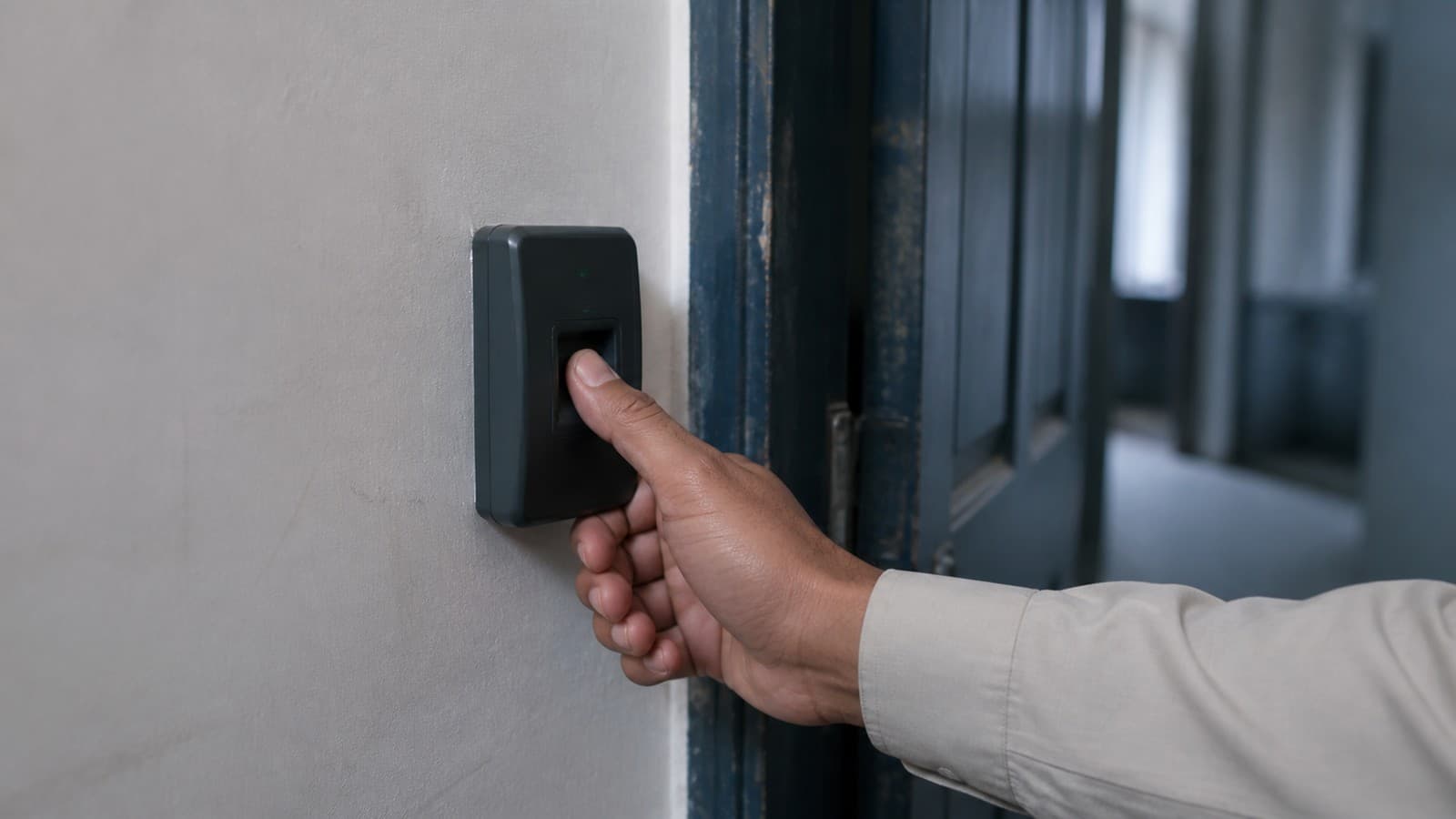
One door, one record
Who came in, through which door, at what time — logged automatically instead of argued about later.
- Fingerprint, face or card
- Per-door, per-hour rules
- Wired to alarm and recorder
Layer 1
The boundary: gates and barriers
A gate that closes itself and records who opened it turns away most trouble before anything else has to. We motorise existing sliding and swing gates where the steel can take it, and fit boom barriers at society entrances, plaza parking and office yards — the same barrier hardware the gated communities in Bahria and DHA run at their main gates.
- Motors retrofitted to existing sliding and swing gates
- Boom barriers for societies, plazas and parking yards
- Remote, keypad, RFID and phone-app operation
- Automatic stop on obstruction — mandatory where children pass
Layer 2
The door: access that names people
A key tells you nothing about who used it, and it rarely comes back when staff move on. A fingerprint or card terminal makes access personal: granted per person, cancelled in seconds, logged every time. On an office glass door in Blue Area or a school gate in G-11, the same terminal quietly becomes the attendance register.
- Fingerprint and face terminals for doors and gates
- RFID card and PIN keypad locks
- Magnetic locks on glass doors, with a safe manual exit
- Time zones per person — staff in working hours, owner always
- Attendance export straight to payroll
Layer 3
Detection: intruder, smoke and fire
If someone is inside after hours, or a storeroom is smouldering, the building should say so loudly and immediately. Door contacts, motion sensors and smoke detectors report to one panel that fires the siren and calls your phone. Anywhere stock sleeps overnight — a mart's godown, a pharmacy store, a restaurant kitchen — smoke detection goes in first.
- Wired and wireless intruder alarms with battery backup
- Smoke and heat detection for stores, kitchens and server rooms
- Siren, strobe and phone-call alerts
- Zoning — arm the shop floor while the office above stays live
Layer 4
Verification: answer the door from the desk
The most common lapse in any secured building is opening the door to find out who knocked. A video door phone ends it: the receptionist sees the yard gate, the guest house counter sees the street door, a flat in an E-11 high-rise sees the lobby — and the lock releases only after the face on the screen earns it.
- Video door phones for homes, clinics and offices
- Multi-flat intercom for plazas, hostels and apartment blocks
- Remote release wired into the electric lock
- Answer from a phone when the desk is empty
Three decisions the survey settles before the quote
Fail open, or fail locked
When the power drops, each electric lock does one of two things — and the right answer differs door by door. The stairwell exit must release; the stock room must hold. We record the choice for every door on the quotation, so it is a decision you made, not a default nobody noticed.
Permission before drilling
In a rented office or a markaz plaza, conduit and barrier civil work need the landlord or building management to agree first — CDA-side buildings take this seriously. We put the routing on paper for that approval, and where drilling is refused we run tidy surface trunking instead of arguing.
One timeline, shared cabling
The gate log, the door log, the alarm events and the camera footage can sit on one clock — so 'who came in at 21:40' is one search, not four. Fitted in the same visit they share conduit and power, which is cheaper than four separate jobs by a distance.
Security questions
Can the biometric terminal run my attendance and payroll?
That is usually why offices buy it. The terminal that opens the door also keeps the in-out register, and the register exports to whatever your accountant already uses. If you take our attendance software, hours, overtime and late marks flow into the salary sheet from one clock nobody can argue with — the same setup works for a school gate or a software house floor.
What happens to electric locks and alarms when the power goes?
They keep working, or we have not done our job. Islamabad's outages are shorter than up-country but voltage dips and restoration spikes are routine, so every panel and controller we fit gets a battery sized against the building's real outage pattern and surge protection on the supply. Whether each door fails open or fails locked is decided with you, per door, in writing — a fire exit must release, a strong room must not.
What do these systems cost in Islamabad?
A standalone biometric door lock starts around PKR 22,000 fitted. A wired intruder alarm for a shop or office — panel, siren, sensors and battery — typically lands between PKR 40,000 and 70,000. Gate and barrier automation depends entirely on the weight and condition of the steelwork, so it is priced at survey, and the survey is free anywhere in Islamabad and Rawalpindi.